
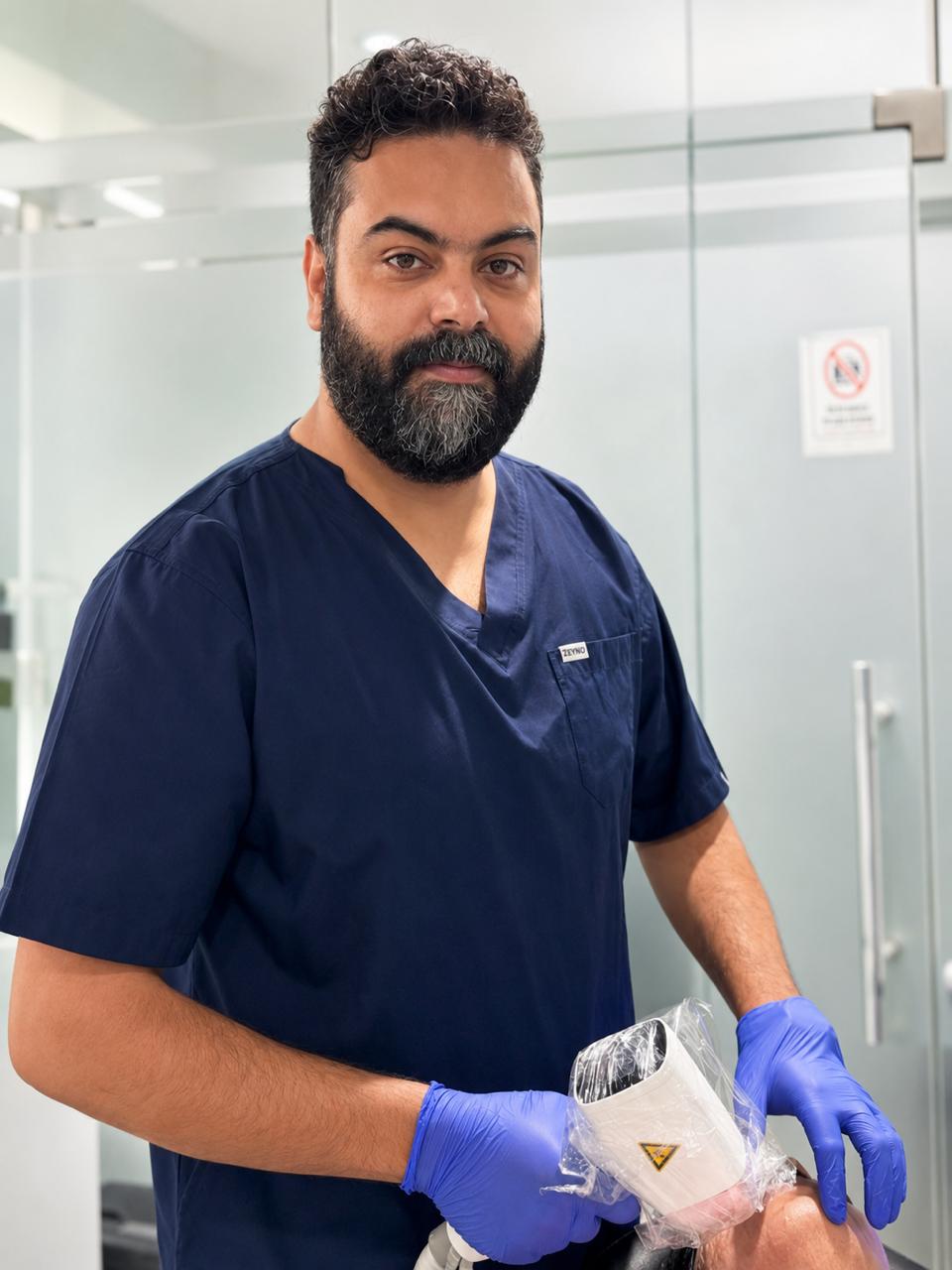
For women living with Polycystic Ovary Syndrome (PCOS), Polycystic Ovary Disease (PCOD), and Polyendocrine Metabolic Ovarian Syndrome (PMOS), unwanted facial and body hair can be one of the most emotionally challenging symptoms. Excess hair growth, medically known as hirsutism, can significantly affect confidence, self-esteem, and overall quality of life.
While laser hair removal is widely regarded as one of the most effective long-term hair reduction treatments, many patients become discouraged when hair continues to grow despite completing multiple laser sessions.
According to Dr. Mir Waleed Mansoor, Founder of Hair of Kashmir Clinic, inconsistent results are often not due to the laser technology itself but rather the complex hormonal imbalance associated with conditions such as PCOS, PCOD, and PMOS. These cases require a comprehensive medical evaluation, individualized treatment planning, and continuous monitoring to achieve the best possible outcomes.
With 10+ years of experience in aesthetic medicine, laser hair reduction, electrolysis, hair restoration, and regenerative aesthetic medicine, Dr. Waleed has dedicated his practice to treating complex and treatment-resistant cases of unwanted hair growth. He is also a Lifetime Member of the Institute of Laser & Aesthetic Medicine (ILAMED) and has been honored with the COSCON International Awards in 2023 and 2024 for his contributions to cosmetic and aesthetic medicine.
Over the years, Dr. Waleed has successfully managed numerous patients who had undergone several laser sessions at other clinics without achieving satisfactory results. Rather than focusing only on visible hair, his approach emphasizes identifying the underlying causes responsible for persistent hair growth.
“Laser hair reduction outcomes depend on multiple factors—including appropriate technology, accurate patient assessment, suitable treatment parameters, clinical expertise, and a personalized treatment protocol,” explains Dr. Waleed. “Advanced US FDA-approved laser systems provide excellent capabilities, but successful outcomes result from the combination of advanced technology, skilled application, and proper medical understanding. It is truly a partnership between man and machine.”
Hormonal disorders such as PCOS, PCOD, and PMOS are characterized by elevated androgen levels and ongoing hormonal fluctuations that can continue stimulating active hair follicles while activating previously dormant ones. This is why patients with these conditions often require a more specialized treatment strategy than individuals without hormonal disorders.
At Hair of Kashmir Clinic, every patient undergoes a comprehensive assessment before treatment begins. Factors including hormonal profile, skin type, hair thickness, hair colour, medical history, and previous treatment response are carefully evaluated to develop a personalized treatment plan.
For patients with resistant, fine, blonde, grey, white, or laser-resistant hair—where insufficient pigment limits laser effectiveness—Dr. Waleed combines electrolysis with laser hair reduction. Electrolysis targets individual hair follicles directly and is particularly effective for facial areas such as the chin, upper lip, and residual hairs that remain after laser treatments.
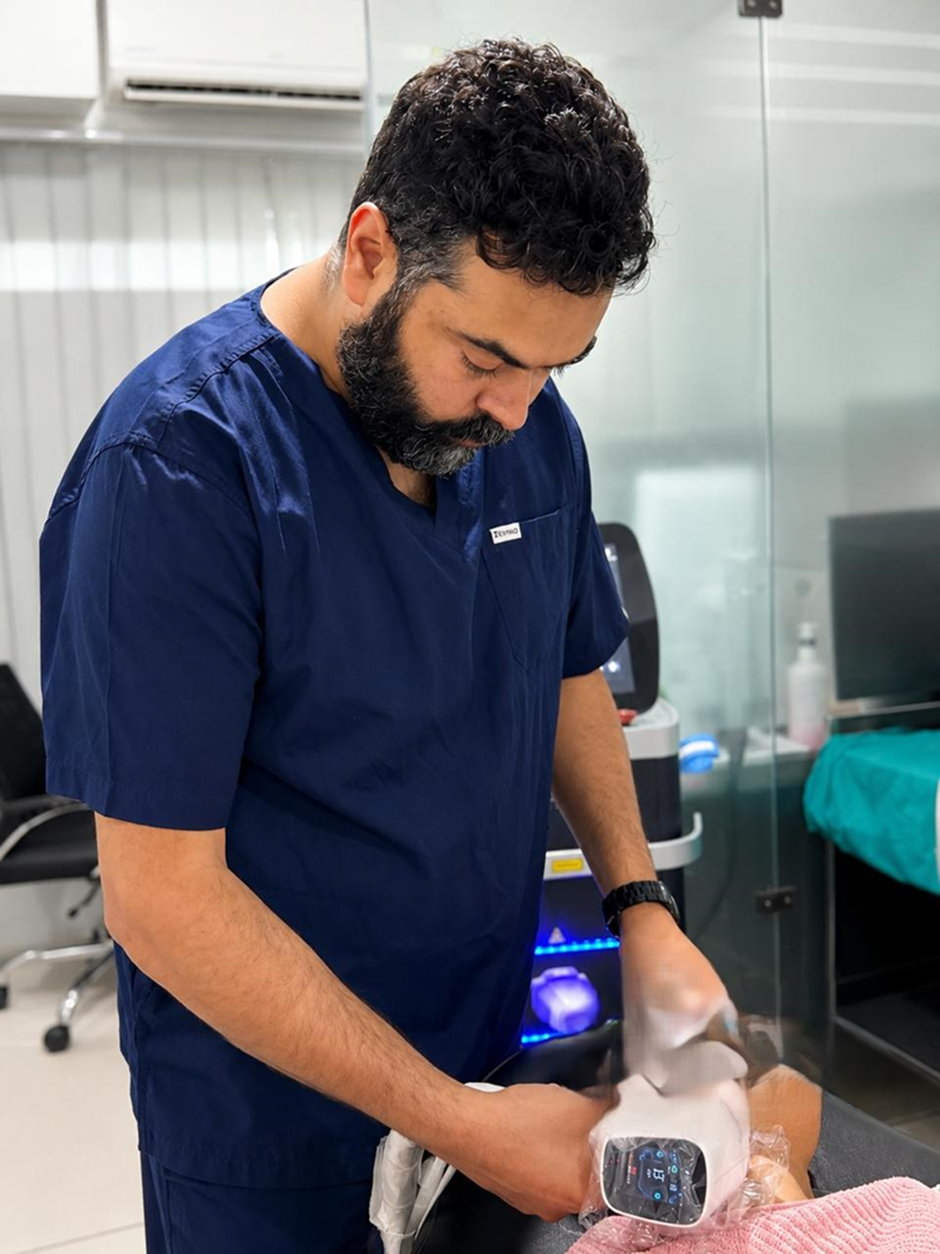
Dr. Waleed also believes that patient education is essential for long-term success. He explains that maintenance sessions may be necessary for patients with hormonal conditions because ongoing hormonal changes can trigger new hair growth over time. This should not automatically be considered a treatment failure but rather an expected aspect of managing hormone-related hair growth.
Through personalized treatment planning, advanced US FDA-approved laser technology, electrolysis, and evidence-based aesthetic medicine, Dr. Mir Waleed Mansoor and Hair of Kashmir Clinic continue to help patients with PCOS, PCOD, and PMOS achieve safer, more predictable, and long-lasting hair reduction outcomes.
By addressing the underlying hormonal factors through a comprehensive approach that includes lifestyle modification, appropriate medical guidance, and advanced hair reduction technologies, Dr. Waleed offers a personalized treatment plan rather than simply treating visible hair. This medically guided strategy helps achieve better long-term outcomes, renewed confidence, and an improved quality of life for individuals struggling with hormone-related unwanted facial and body hair.
